名古屋城 再訪 Revisiting to NAGOYA CASTLE
本丸御殿 江戸時代の華麗な姿を復元
過日、名古屋城を8年ぶりに訪れた。今回で3回目の訪問である。
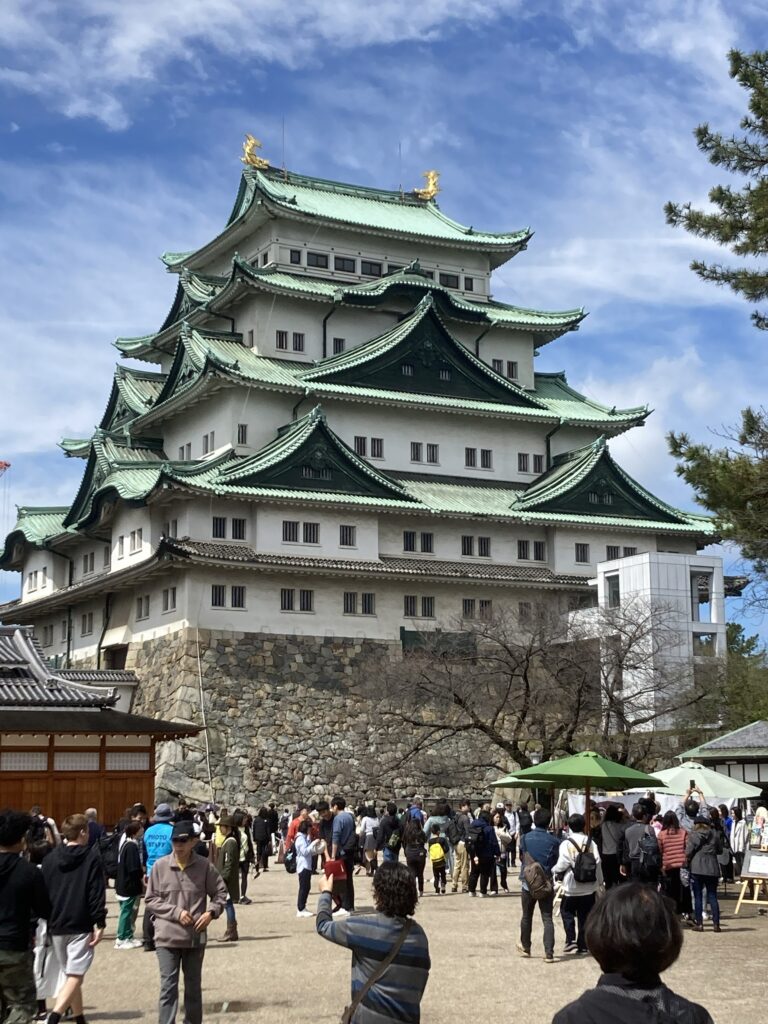
名古屋城は、徳川幕府の初代将軍である徳川家康が1615年に築城した豪華な金の鯱を頂く城として有名である。
現在、耐震性強化に向けて木造復元工事(完成は最短2032年以降)が進められており、残念ながら天守閣は非公開となっているため、今回の訪問の目的は2018年に完全修復された本丸御殿の見学である。
本丸御殿は将軍の宿泊施設及び迎賓館として位置づけられている。
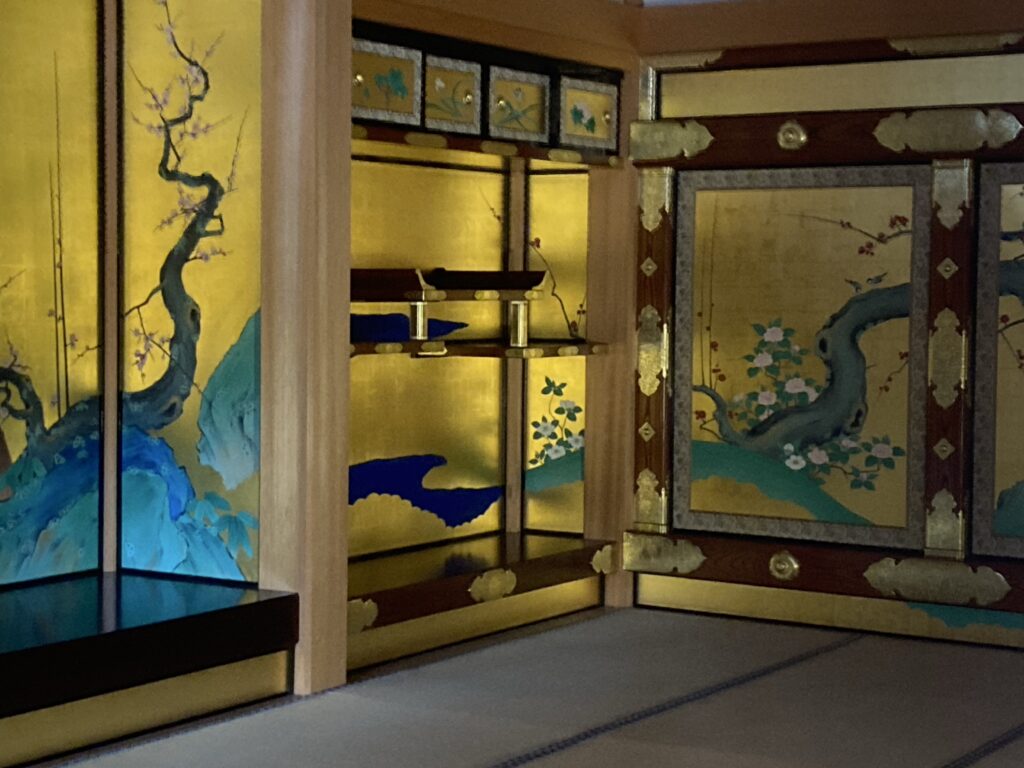
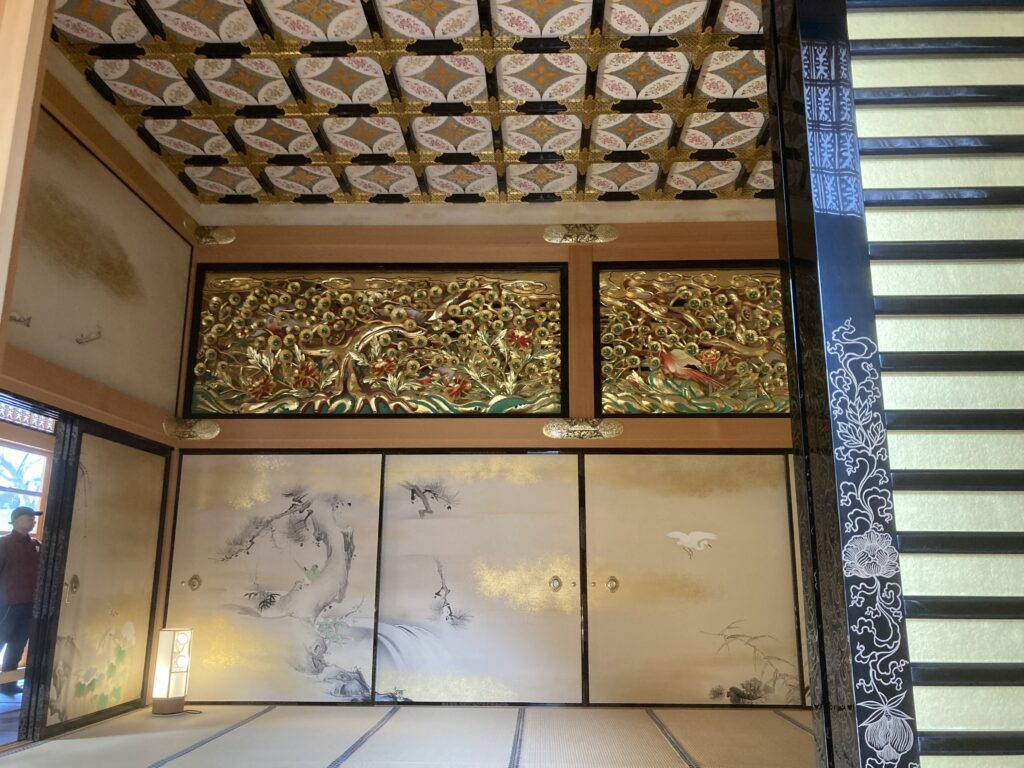
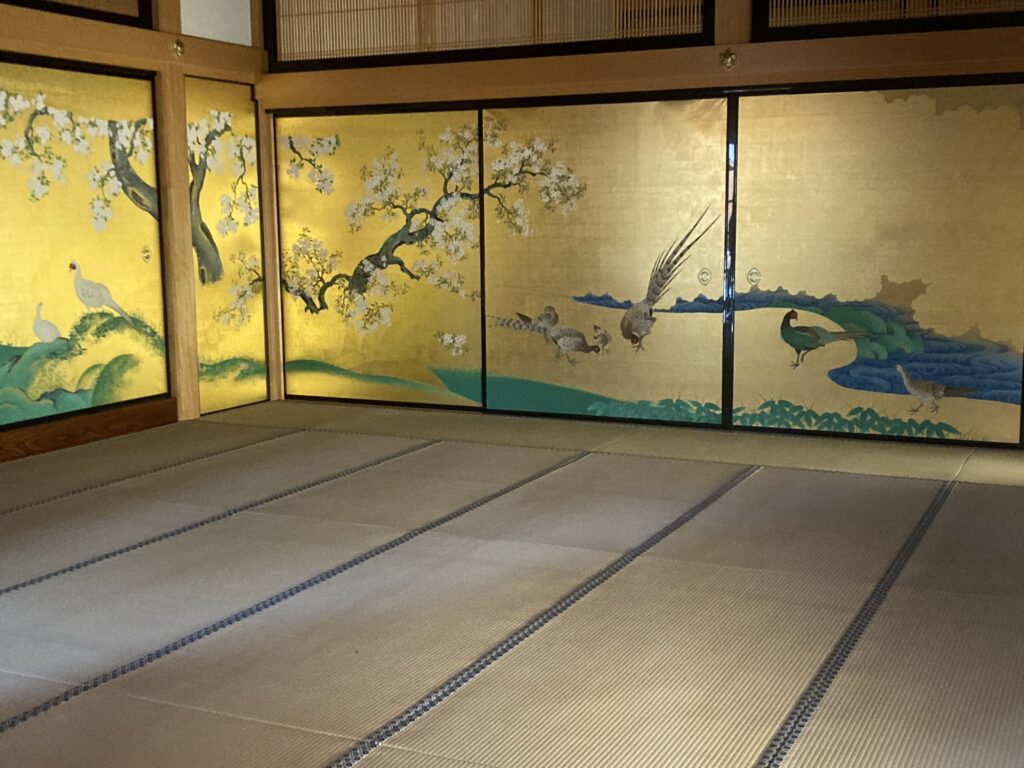
書院造りが施された室内の障壁画、杉戸絵は、蒔絵、金箔押しなど日本の伝統工芸が随所に活かされている。特に上洛殿や表書院の天井や壁面の装飾はとても豪華で美しく必見である。
また、見落としがちであるが本丸御殿全体で約3000点が使われていると言われる精巧で豪華な飾り金具も注目に値する。
当日は、大勢の見学客のため、一つひとつをゆっくりと鑑賞することはできなかったが、束の間、江戸時代の大名気分に浸ることができた。
これから行ってみようと思う方は、必ず単眼鏡やオペラグラスをお忘れなく!
Honmaru Palace
The Splendid Appearance of the Edo Period Restored
The other day, I visited Nagoya Castle for the first time in eight years. It was my third visit in total.
Nagoya Castle is famous for the magnificent golden shachihoko (mythical tiger-headed carp ornaments) that crown the roof, and it was originally constructed in 1615 by Tokugawa Ieyasu, the first shogun of the Tokugawa shogunate.
At present, wooden reconstruction work aimed at strengthening earthquake resistance is underway (with completion expected no earlier than 2032). Unfortunately, the castle keep is currently closed to the public. For this reason, the purpose of my visit this time was to see the Honmaru Palace, which was fully restored in 2018. The Honmaru Palace served as both accommodation for the shogun and as a reception hall for distinguished guests.Inside the palace, the sliding-door and wall paintings created in the traditional shoin-zukuri architectural style make extensive use of Japanese decorative techniques such as makie lacquer work and gold-leaf application. In particular, the decorations on the ceilings and walls of the Jorakuden and the Omote Shoin are remarkably luxurious and beautiful—truly not to be missed.
Another feature that is easy to overlook but well worth attention is the exquisitely crafted and lavish ornamental metal fittings. It is said that approximately 3,000 of these fittings are used throughout the entire Honmaru Palace.
On the day of my visit, there were many visitors, so I was not able to take my time viewing each detail. Even so, for a brief moment I was able to imagine what it might have felt like to be a daimyo in the Edo period.If you are planning to visit, be sure not to forget a monocular or opera glasses!