プッチーニと広重 Puccini and Hiroshige
「ある晴れた日に」を聴いて
私は、作品(絵画)を制作する際、BGMを聴くことが多い。お気に入りのCD、FM、ポッドキャストなど、その時の気分でさまざまである。先日もFMを聴いているとプッチーニのオペラ「蝶々夫人」のアリア「ある晴れた日に」が流れてきた。このアリアは「蝶々夫人」の中で最も有名なものだが、長崎が舞台なので「お江戸日本橋」「サクラ サクラ」「君が代」など日本の楽曲が多く引用されている。中でも「お江戸日本橋」は、東海道五十三次の宿場や名物を詠みこんだ民謡だが、江戸時代、当時の主要道路である五街道の起点として栄えた日本橋は、さまざまな浮世絵に描かれている。代表的なのは、歌川広重の「東海道五十三次 日本橋 朝の景」である。朝焼けの空を背景に、木戸が開かれ、今まさに大名行列の先頭が橋を渡り終え、橋の手前では、魚屋たちが忙しそうに立ち回っている、そんな日本橋の早朝の活気ある情景が描かれている。特に上部の美しい藍色のぼかしで夜明けが表現されている点が印象的な作品だ。
プッチーニは実際に広重のこの浮世絵を観たのだろうか?「ある晴れた日に」を聴きながら、そんなことを考えてしまった。
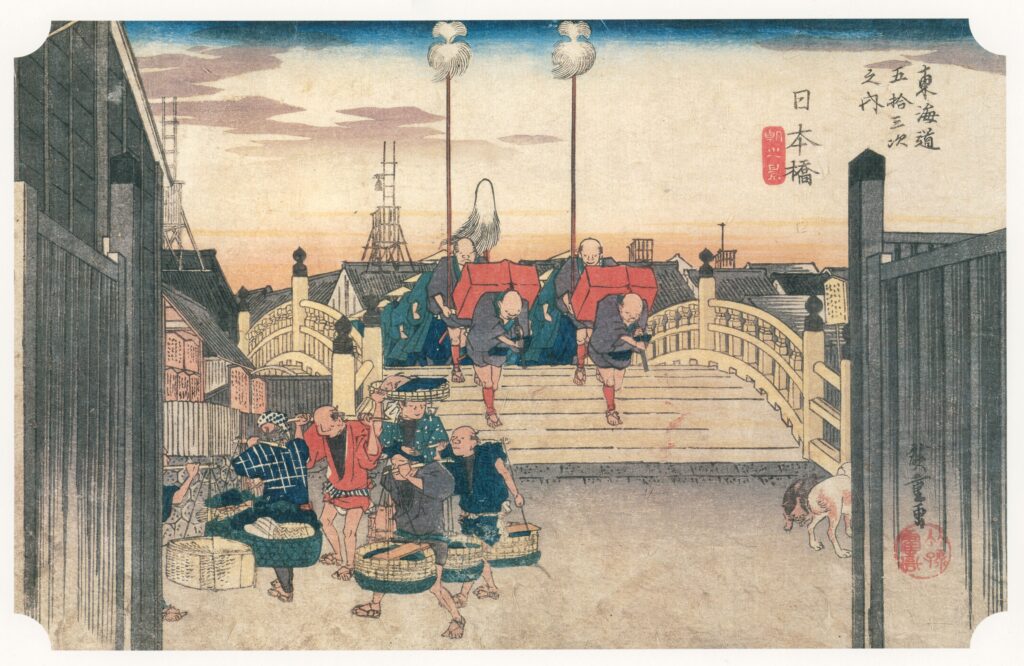
出典 パブリックドメインQ https://publicdomainq.net
Listening to “Un bel dì, vedremo“
When I am painting, I often like to have music playing in the background. Depending on my mood, I may listen to a favorite CD, an FM radio program, or a podcast.
The other day, while listening to FM radio, I heard Un bel dì, vedremo (“One Fine Day“), the famous aria from Puccini‘s opera Madama Butterfly. It is the best-known aria in the opera. Since the story is set in Nagasaki, Puccini incorporated several Japanese melodies into the score, including Oedo Nihonbashi, Sakura, Sakura, and even Kimigayo, Japan‘s national anthem.
Among these, Oedo Nihonbashi is a traditional folk song whose lyrics celebrate the post stations and local specialties along the fifty-three stations of the Tōkaidō Road. During the Edo period, Nihonbashi flourished as the starting point of the Five Major Highways, the principal road network of Japan, and its bustling streets became the subject of numerous ukiyo-e prints.
Perhaps the most celebrated example is Utagawa Hiroshige‘s Nihonbashi: Morning Scene, from his renowned series The Fifty-three Stations of the Tōkaidō. Against the backdrop of a glowing dawn sky, the gate has just been opened for the day. The leading ranks of a daimyō procession have already crossed the bridge, while fish merchants busily hurry about in the foreground. Hiroshige vividly captures the lively atmosphere of Nihonbashi in the early morning. I am especially impressed by the beautiful gradation of deep indigo in the upper part of the print, which evokes the first light of day with remarkable subtlety.
I cannot help wondering whether Puccini himself ever saw this ukiyo-e masterpiece by Hiroshige. As I listened to Un bel dì, vedremo, that thought quietly crossed my mind.