ナチスを騙した「エマオの晩餐」 The “Supper at Emmaus” That Fooled the Nazis
オランダの至宝を守った画家とは?
8月末、フェルメールの展覧会が大阪で始まった。今回は「真珠の耳飾りの少女」の再来日ということもあり、入場制限までされるとか。とにかく、日本でのフェルメールの人気は凄まじく、ゴッホ、モネ、ルノアール等の印象派の画家たちの展覧会と同じく、いつも大入り満員である。
さて、有名画家の作品には、贋作が付きものだが、ご多分に漏れず、フェルメールにもかつて贋作事件があったことはご存じだろうか?しかも被害者はナチスの高官だったというから興味深い。騙したのはオランダの画家ハン・ファン・メーヘレン。メーヘレンは17世紀のオランダ黄金時代の技法に熟達していたが、当時(1930年代)は、新印象派やフォービズムが主流であり不遇の時代を過ごしていたらしい。画壇に受け入れられなかったメーヘレンは、悪魔の誘惑に負け、少しずつ贋作作りという悪行に手を染めていった。極めつけはフェルメール「エマオの晩餐」の贋作の製作である。
やがて月日は流れ、第二次世界大戦が勃発し、オランダはナチス占領下となる。ほどなく美術品収集が趣味だったナチス高官 ゲーリングは「エマオの晩餐」(※メーヘレンの贋作)に目をつけ、画商を通して自らの収集品と交換した。ゲーリングがまんまとメーヘレンに騙された瞬間だった。
戦後、オランダ絵画を引き渡したナチス協力者として裁判にかけられたメーヘレンだったが、最終的に、あくまでも「エマオの晩餐」は自分の贋作であるという主張が認められ、今では、オランダの至宝を守った英雄だとも評されている。
私は、この話を本で知り、その後関連の映画も観たのだが、つくずく考えてしまった。もし、円熟期のメーヘレンが悪魔の誘惑に打ち勝っていたら、一体、どんな画家になっていただろうか? そして、それは、その後のヨーロッパ画壇にどんな影響を与えたのだろうか?
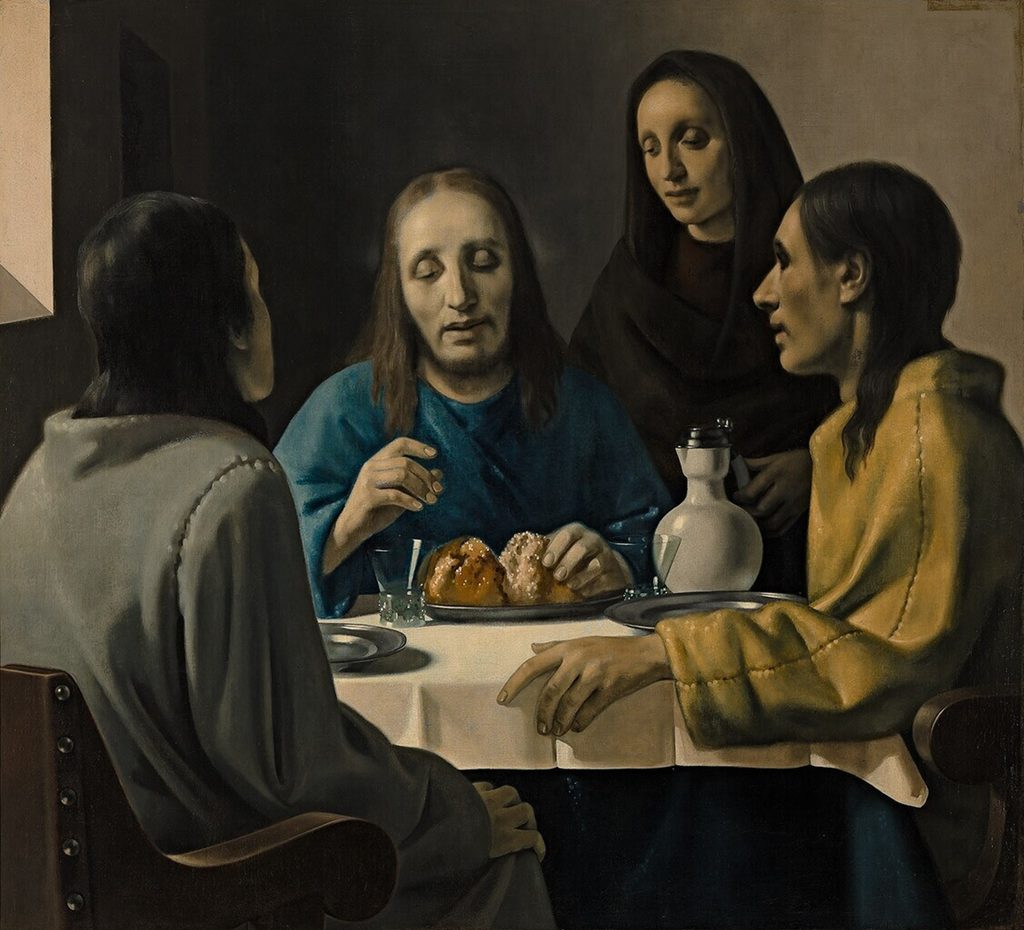
「The “Supper at Emmaus」 Han van Meegeren 1937
Public domain , via Wikipedia Commons.
Who Was the Painter Who Saved a Dutch National Treasure?
End of August, an exhibition of Vermeer’s works opened in Osaka City. This time, the return to Japan of Girl with a Pearl Earring has generated such enormous interest that attendance is reportedly being restricted. In any case, Vermeer’s popularity in Japan is extraordinary. Like exhibitions featuring Impressionist painters such as Van Gogh, Monet, and Renoir, his exhibitions are always packed with visitors.
Now, famous painters inevitably attract forgers, and Vermeer is no exception. Did you know that Vermeer was once at the center of a major forgery scandal? What makes the story particularly fascinating is that one of the victims was a high-ranking Nazi official.
The man who fooled him was the Dutch painter Han van Meegeren. Van Meegeren had mastered the techniques of the Dutch Golden Age of the seventeenth century, but in the 1930s, when Neo-Impressionism and Fauvism were in vogue, he apparently struggled to gain recognition. Unable to win acceptance in the art world, van Meegeren succumbed to the temptation of the devil and gradually began to engage in the dark art of forgery. His crowning achievement was the creation of a fake Vermeer, Supper at Emmaus.
As the years passed, World War II broke out, and the Netherlands came under Nazi occupation. Before long, the Nazi official Hermann Göring, who was an avid collector of art, set his sights on Supper at Emmaus—which was the fake work by van Meegeren—and acquired it through an art dealer in exchange for part of his own collection. It was the very moment when Göring was completely duped by van Meegeren.
After the war, van Meegeren was put on trial as a collaborator who had handed Dutch paintings over to the Nazis. In the end, however, his claim that Supper at Emmaus was nothing more than his own forgery was accepted. He is now even regarded by some as a hero who saved a Dutch national treasure.
I first learned this story from a book and later watched a film related to the case. It left me pondering deeply: If van Meegeren, at the height of his artistic maturity, had resisted the temptation of the devil, what kind of painter might he have become? And what influence might he have had on the European art world that followed?