ターナーと夏目漱石 Turner and Natsume Soseki
漱石文学に投影されたイギリス絵画の面影
先月から東京でターナー展が始まった。2018年以来、8年ぶりの国内開催である。18世紀から19世紀のイギリスのロマン派絵画を代表するジョセフ・マロード・ウィリアム・ターナー(1775年~1851年)は、日本では画材メーカーの名前に使われるなど人気のある画家である。2018年のターナー展は、「光の画家」としてのターナー像を前面に押し出した王道の企画展だったが、今回は現代美術と対比させた斬新な展示構成らしく来年春の大阪への巡回展が今から待ち遠しい。
さて、今回のテーマはターナー展ではなく、ターナーと近代日本を代表する文豪、夏目漱石(1867年~1916年)との接点を探る。
先日、友人と東京のターナー展の話をしていた時、漱石の初期の作品「坊ちゃん」(1906年)の中でターナーに言及されている場面があると教えられた。このことは、全く記憶になく初耳だったので早速、実に何十年ぶりかで再読した。
関連する部分は、主人公(旧制中学校教師)が赤シャツ(AKASHATSU・教頭)と野だ(NODAIKO・同僚)と海へ釣りに行く場面である。
以下、作品より抜粋。
「あの松を見給え、幹が真直で上が傘のように開いてターナーの画にありそうだね」と赤シャツが野だに言うと、野だは「全くターナーですね。どうもあの曲がり具合ったら、ありませんね。ターナーそっくりですよ」と心得顔である。(私は)ターナーとは何の事だか知らないが、聞かないでも困らないことだから黙っていた。
更にこの会話の少し後の場面にも「ターナー」が登場する。
(私は)出来ることなら、あの島(愛媛県松山市沖の四十島がモデル)の上に上がってみたいと思ったから、あの岩のあるところへは舟はつけられないんですかと聞いてみた。
つけられんこともないですが、釣りをするには、あまり岸じゃいけないんですと赤シャツが異議を申し立てた。おれは黙っていた。すると野だがどうです、教頭、これからあの島をターナー島と名づけようじゃありませんかとよけいな発議をした。
漱石は、イギリス留学時代(1901年~1902年)にロンドンのテート・ギャラリーなど美術館や博物館へ足を運び、ターナーの作品に触れていたことが知られている。留学中のこのような体験、美的感覚が彼の文学作品の主人公の思考に強く影響を与えたことは想像に難くない。また帰国後は、作家活動の余技として山水画や水墨画を制作したり、油絵にも挑戦したりするなど絵画に対し、終生、情熱を燃やしていたことが伝えられている。若き日、彼の地で培った漱石の芸術に注ぐ熱い眼差が強く感じられるのである。
蛇足だが、漱石は留学中、慣れない異国での生活から精神を患い、美術館で「オフィーリア」(ジョン・エヴァレット・ミレイ 1851年)などラファエル前派の作品を観て心を癒したとも伝えられている。この体験が「坊ちゃん」と同時期に発表された「草枕」(1906年)の着想に繋がったそうである。
何だか「草枕」も読みたくなってきた今日この頃の私である。
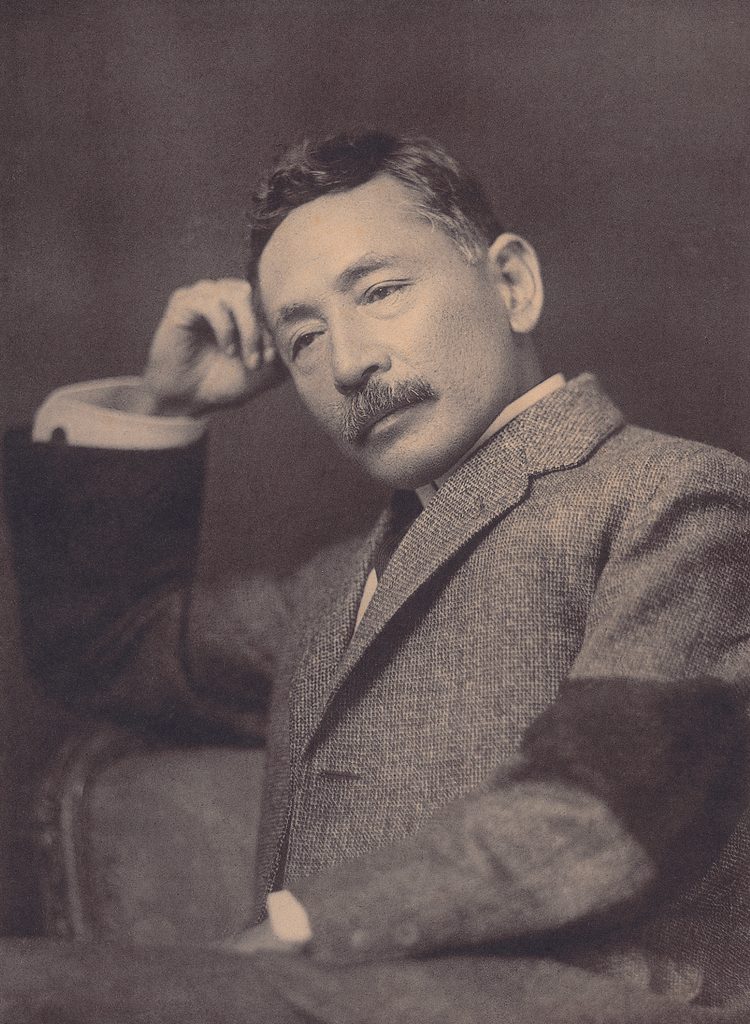
出典 public domain,via Wikipedia Commons
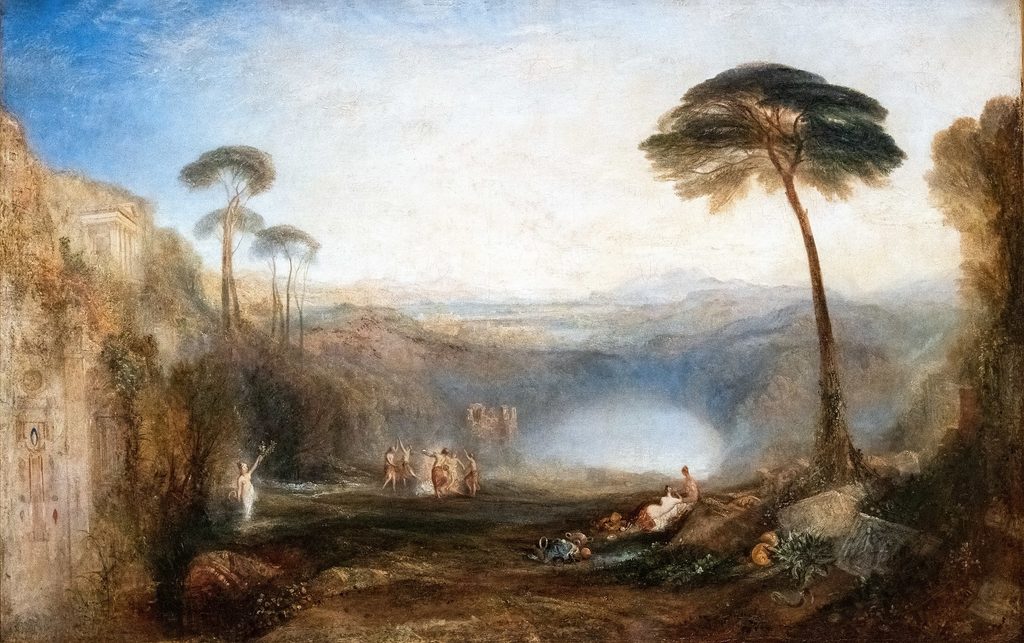
「The Golden Bough」Turner
出典 有名な画家の作品<パブリックドメイン>
https://worldmasterpieces.blog.fc.com
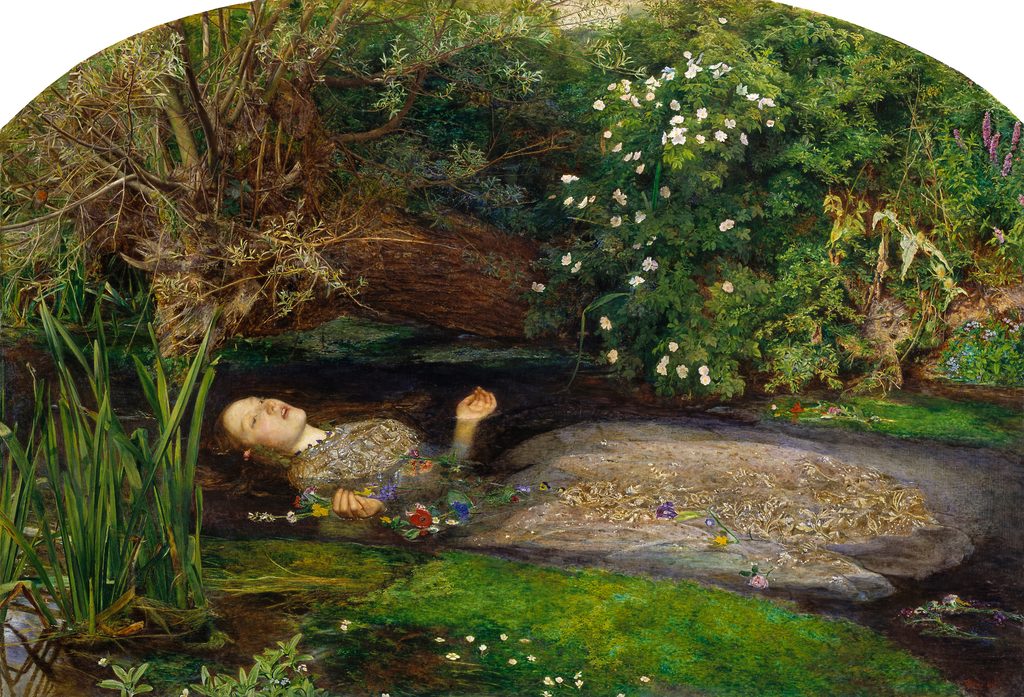
ジョン・エヴァレット・ミレイ
「Ophelia」
John・Everret・Millais
出典 Fine Art
https://fineartfree.com/ja
Traces of British Painting Reflected in Soseki’s Literature
The Turner Exhibition opened in Tokyo last month. It is the first major exhibition of his works to be held in Japan in eight years, since 2018. Joseph Mallord William Turner (1775–1851), one of the leading figures of British Romantic painting in the eighteenth and nineteenth centuries, is a popular artist in Japan. His name is even used by an art materials manufacturer.
The 2018 Turner Exhibition was a classic retrospective that highlighted Turner as a “painter of light.” This time, however, the exhibition reportedly features an innovative approach, presenting his works in contrast with contemporary art. I am already looking forward to its traveling exhibition in Osaka next spring.
But today’s subject is not the Turner Exhibition itself. Rather, I would like to explore the connection between Turner and Natsume Soseki (1867–1916), one of the most celebrated literary figures of modern Japan.
The relevant passage describes a fishing trip to the sea taken by the protagonist, a teacher at a middle school, together with Red Shirt (Akashatsu, the vice-principal) and Noda (Nodaiko,a fellow teacher).
The other day, while talking with a friend about the Turner exhibition in Tokyo, I was told that Turner is actually mentioned in a scene from Soseki‘s early novel Botchan (1906). I had absolutely no recollection of this and was quite surprised to hear it. So I promptly picked up the book and reread it for the first time in several decades.
“Just look at that pine tree,” Red Shirt said to Nodaiko. “Its trunk is perfectly straight, and the branches spread out at the top like an umbrella. It looks like something you might find in a Turner painting.”
“Absolutely! It’s Turner all right. That curve is simply remarkable. It’s just like a Turner!” Nodaiko replied knowingly.
I had no idea what Turner was, but it didn’t seem important enough to ask, so I kept quiet.
Turner appears once again in a scene shortly after this conversation.
I thought that, if possible, I would like to climb onto that island (said to have been modeled on Yotsushima, a small island off the coast of Matsuyama in Ehime Prefecture), so I asked whether our boat could land near those rocks.
“It’s not impossible,” Red Shirt objected, “but we can’t get too close to the shore if we’re going to fish.”
I said nothing. Then Nodaiko suddenly came up with an unnecessary suggestion:
“What do you say, Vice-Principal? Why don’t we call that island Turner Island from now on?”
It is well known that during his stay in England (1901–1902), Soseki visited art galleries and museums in London, including Tate Gallery, where he encountered Turner’s paintings.
It is not difficult to imagine that these experiences abroad, together with the aesthetic sensibilities he developed there, had a profound influence on the thoughts and perceptions of the characters in his literary works.
After returning to Japan, he continued to pursue his interest in painting throughout his life. As a creative pastime alongside his literary career, he produced landscape paintings and ink paintings, and even tried his hand at oil painting. One can sense the passionate artistic spirit of Soseki, whose appreciation of art had been nurtured during his younger days in England.
As a little aside, Soseki is also said to have suffered a mental breakdown while studying abroad, partly due to the difficulties of living in an unfamiliar foreign country. During this period, he reportedly found solace in visiting art museums and viewing works by the Pre-Raphaelite Brotherhood, including Ophelia (1851) by John Everett Millais.
Apparently, this experience also inspired the conception of Kusamakura (The Three-Cornered World, 1906), which was published in the same year as Botchan.
Somehow, all this has made me want to read Kusamakura as well. Perhaps that will be my next literary adventure!