ムソルグスキー作「展覧会の絵」Modest Mussorgsky’s Pictures at an Exhibition
謎多き展示作品
かつて学生の頃、イギリスのロックバンド「エマーソン・レイク&パーマー」(以下ELP)が人気を博していた。特にリーダー格のキース・エマーソンによるハモンドオルガンや当時は、まだ珍しかったシンセサイザーの斬新な演奏が話題になっていた。彼らのアルバムの中に「展覧会の絵」というのがあった。原曲はロシアの作曲家ムソルグスキーの作品である。どうせクラシック音楽のコピーだろうと当時はさほど気にも留めていなかったが、後年、改めてELP版「展覧会の絵」を聴いて驚いた。それは、単なる「焼き直し」どころではなく、原曲に触発されたELPのムソルグスキーへのオマージュであり、換骨奪胎した楽曲だった。そこまで彼らを熱狂させたものは何だったのか? にわかに気になり始めた。
調べてみると原曲は、ムソルグスキーの友人だったヴィクトル・ハルトマンの遺作展を鑑賞する様子がテーマになっており、作品の印象を描いた10曲と作品と作品の間を散歩する様子を描いた5曲のプロムナードから構成されたピアノ組曲だった。では、ヴィクトル・ハルトマンとは、どんな画家で遺作展の作品とはどんなものだったのか?
残念ながら、そもそもヴィクトル・ハルトマンはプロの画家などではなく、建築におけるロシア様式の創始者の一人として評価されており、建築図面やオペラやバレエの舞台衣装のデザインも手がけた人物だったらしい。そんなわけで彼は、タブローとしての作品は残しておらず、残されたのは建築図面やデザインの下絵、スケッチばかりだった。そして残念ながら、それらの大半は彼の死後、散逸してしまっており、現在もなお「展覧会の絵」の全10曲中、半数の作品は不明なのである。今後、新しい関係資料が発見され、全10曲のモデルとなった「作品」がすべて日の目を見る機会が来ることを期待したい。
以下、原曲のモデルが判明している作品のみ紹介しておきたい。
第 5曲 「卵の殻をつけた雛の踊り」
第 6曲 「”サムエル”ゴールデンベルクと”シュミュイレ”」
第 8曲 「カタコンベ(ローマ時代の墓地)」
第 9曲 「鶏の足の上に立つ小屋(バーバ・ヤーガ)」
第10曲 「キエフの大門(英雄の門)」
The Mystery Behind the Exhibited Works
Back in my student days, the British rock band Emerson, Lake & Palmer (hereafter ELP) enjoyed enormous popularity. In particular, the innovative performances of leader Keith Emerson on the Hammond organ and the then still-rare synthesizer attracted a great deal of attention. One of their albums was titled Pictures at an Exhibition. The original composition, of course, was by the Russian composer Modest Mussorgsky. At the time, I dismissed it as little more than a rock adaptation of a classical piece and paid it little attention. Years later, however, when I listened again to ELP’s version of Pictures at an Exhibition, I was astonished. It was far more than a mere “reworking.” It was an homage to Mussorgsky, inspired by the original work yet completely transformed into something uniquely ELP. What was it that had captivated them so intensely? I suddenly became very curious.
Upon researching the piece, I discovered that the original composition was inspired by an exhibition of works by Mussorgsky’s late friend, Viktor Hartmann. The piano suite consists of ten movements depicting the impressions of various works on display, along with five “Promenades” that portray the composer strolling between the exhibits. This raised another question for me: what kind of artist was Viktor Hartmann, and what exactly were the works shown in the memorial exhibition?
Unfortunately, Hartmann was not primarily a professional painter. Rather, he was regarded as one of the founders of the Russian Revival style in architecture, and he also worked on architectural drawings as well as costume and stage designs for operas and ballets. As a result, he left behind few, if any, independent tableau-style paintings. What survived were mainly architectural plans, design sketches, and preparatory drawings. Sadly, most of these were dispersed after his death, and even today, the models for roughly half of the ten movements in Pictures at an Exhibition remain unidentified. One can only hope that new related materials may someday be discovered, allowing all of the “pictures” that inspired the ten movements to finally come to light.
Below are the works for which the original models have been identified:
- Movement No. 5: Ballet of the Unhatched Chicks
- Movement No. 6: “Samuel” Goldenberg and “Schmuÿle”
- Movement No. 8: Catacombs (A Roman Sepulchre)
- Movement No. 9: The Hut on Fowl’s Legs (Baba Yaga)
- Movement No. 10: The Great Gate of Kiev (The Heroic Gate)
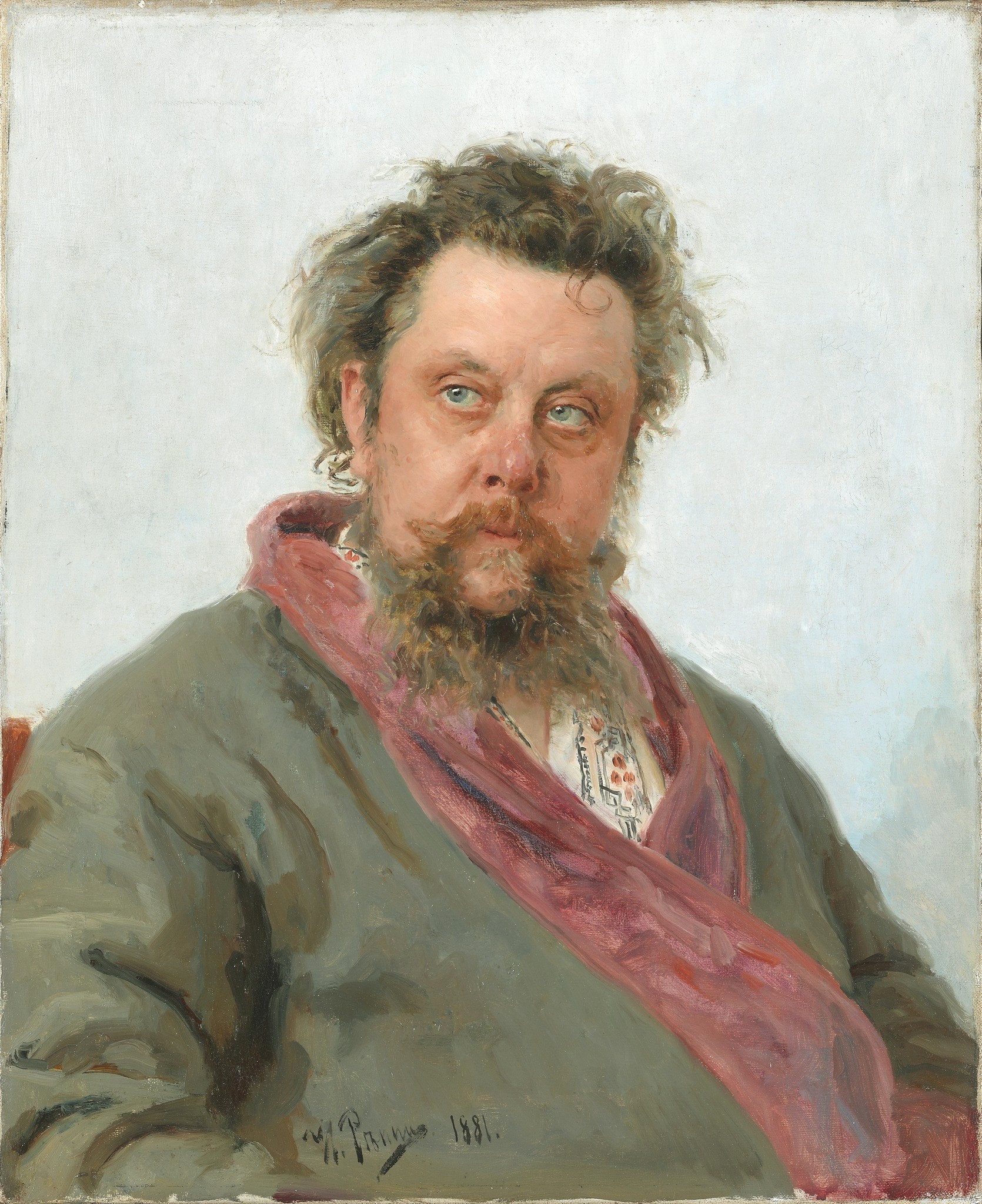
(イリヤ・レーピンにより死の直前に描かれた)
Modest Mussorgsky
(created by Ilya Repin shortly before his death)
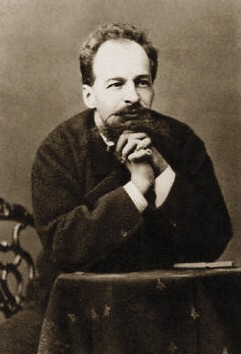
Viktor Hartmann
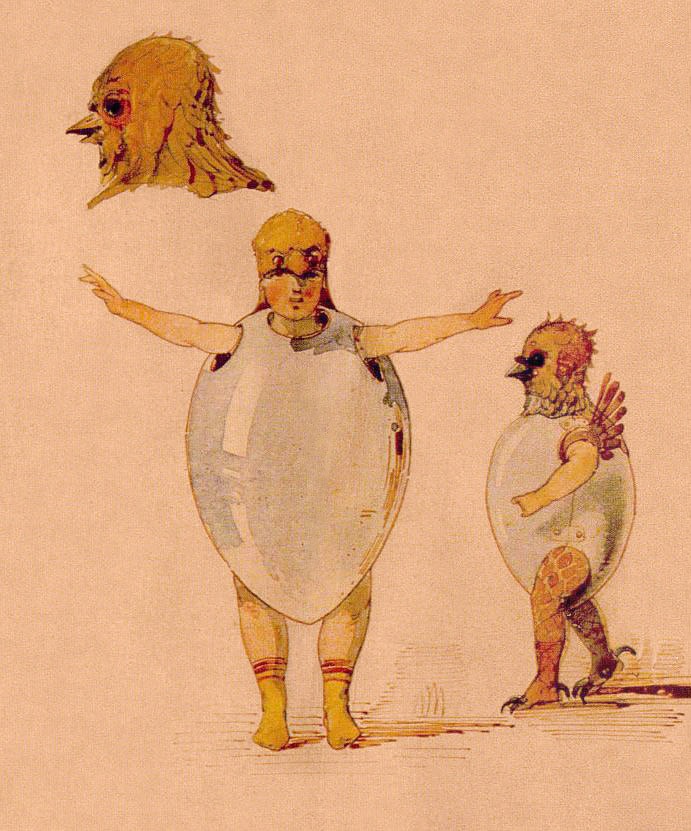
The original painting for the 5th movement 「Ballet of the Unhatched Chicks」
.
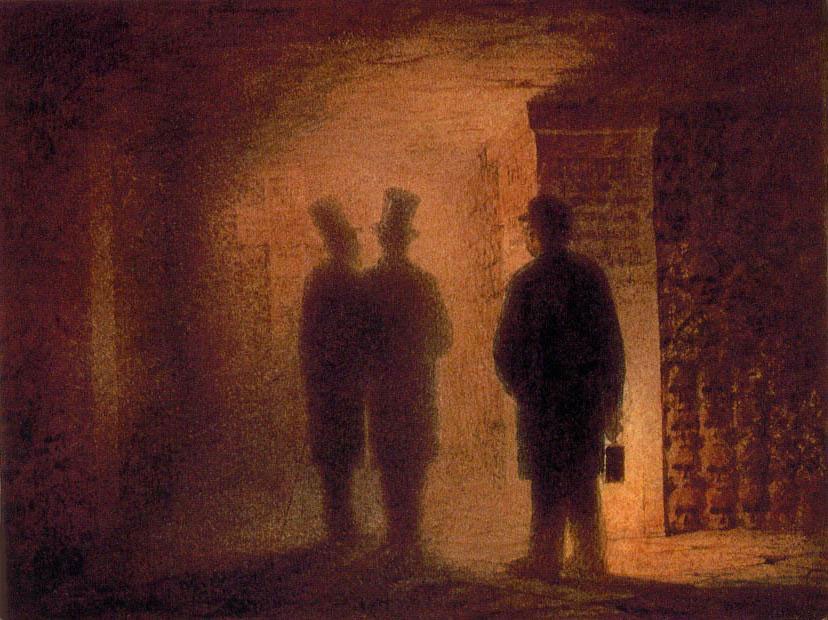
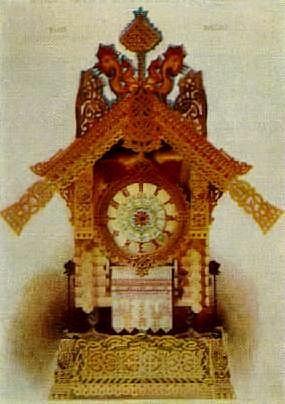
The original painting for the 9th movement 「The Hut on Fowl’s Legs (Baba Yaga) )」
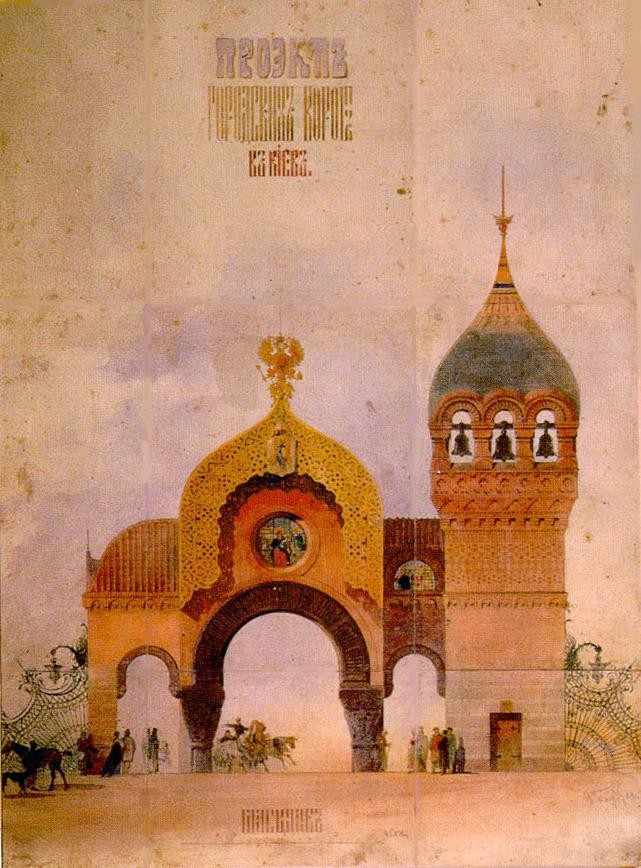
The original painting for the 10th movement 「The Great Gate of Kiev (The Heroic Gate)」
出典 : Public domain ウィキペディアコモンズ 経由で
Source: via Public Domain Wikimedia Commons