ラスト・ディール
運命の絵に魅せられた老美術商が挑む生涯最後の大勝負とは?
前回のブログでイリヤ・レーピンによるムソルグスキーの肖像画(1881年 トレチャコフ美術館蔵)を引用したのだが、今回は、そのレーピンに因んだ映画を紹介したい。タイトルは「ラスト・ディール 美術商と名前を失くした肖像(英題 ” One Last Deal “)」(2018年 フィンランド)雨に濡れた石畳の歩道、路面電車、秋の公園の色づいた樹木などが織りなす北欧の美しい街並みのようす、また通りに面した商店のウィンドウに映りこむ何気ない景色にも監督のクラウス・ハロの細やかな感性が感じられる。 この監督の作品は今までに「ヤコブへの手紙」「こころに剣士を」の2作品を観たが、いずれも主人公と周囲の登場人物との心の交流がじっくりと丁寧に描かれており、作品を観終わった後にしみじみとした深い満足感を得ることが出来た。そして今回の「ラスト・ディール」である。主人公はヘルシンキの老美術商で店内の監視カメラのモニターはブラウン管、電話は壁掛け式、そして領収書はタイプライターで製作と、アナログ生活を絵に描いたような毎日を送っている。
そんな彼が、とある絵画オークションで1枚の肖像画(後にイリヤ・レーピン作「キリスト像」と判明※物語のための架空の作品)に出会うことから物語が展開する。自らの年齢を考えて、店をたたんで引退を決意した主人公が後先を考えず、「一目ぼれした肖像画」を高額で競り落とすスリリングな場面は圧巻である。その肖像画の購入資金を娘に無心して断られ、挙句の果てに孫にまで借金してしまう始末。そんな情けない主人公なのだが、孫と一緒に出掛けたアテネウム美術館でヒューエ・シンベル作「老人と少年」を観ながら、孫に「これは命を歩んできた者と歩みゆく者だ。人生を全うした者にしか描けない」と語りかける場面は強く印象に残った。
老人から孫(次世代)へ。世代を超えて美意識は受け継がれる、クラウス・ハロ監督はそんなメッセージを伝えたかったのではないだろうか?
さて、高額で競り落としたレーピン作の「肖像画」は、その後、無事に売却できたのかって?それは、映画を観てのお楽しみ!!
What Is the Final Gamble Undertaken by an Elderly Art Dealer Enchanted by a Fateful Painting?
In my previous blog post, I featured Ilya Repin’s portrait of Modest Mussorgsky (1881, collection of the Tretyakov Gallery). This time, I would like to introduce a film connected to Repin. The title is One Last Deal (Japanese title: The Last Deal: The Portrait Without a Name), a 2018 Finnish film. The rain-soaked cobblestone streets, trams, and autumn trees lining the parks create the beautiful cityscapes of Northern Europe, while even the ordinary reflections in shop windows reveal the refined sensibility of director Klaus Härö.
I had previously seen two of Härö’s films, Letters to Father Jacob and The Fencer. In both works, the emotional connections between the protagonists and the people around them are portrayed with remarkable care and patience, leaving the viewer with a deep and lingering sense of satisfaction after the film ends. And now comes One Last Deal.
The protagonist is an elderly art dealer in Helsinki who lives an almost completely analog life: the surveillance monitor in his shop is an old cathode-ray tube television, the telephone is wall-mounted, and receipts are typed out on a typewriter.
The story begins when, at an art auction, he encounters a certain portrait painting — later identified as Christ by Ilya Repin (a fictional artwork created specifically for the film). Thinking about his age, the protagonist has already decided to close his shop and retire. Yet, without considering the consequences, he bids an enormous sum for the “portrait he fell in love with at first sight.” The tense auction scene is absolutely gripping.
Desperate to secure the funds for the purchase, he first asks his daughter for money and is turned down. In the end, he even borrows money from his own grandson. Pathetic as the protagonist may appear, one scene left a particularly strong impression on me. While visiting the Ateneum Art Museum with his grandson, they stand before Hugo Simberg’s painting The Old Man and the Boy. The old art dealer says to his grandson, “This is about one who has walked through life and one who is about to walk it. Only someone who has fulfilled a lifetime can paint such a work.”
From grandfather to grandson — from one generation to the next. Perhaps director Klaus Härö wished to convey the message that an appreciation for beauty and art is something inherited across generations.
So, was the Repin portrait that he purchased at such a staggering price ultimately sold successfully? Well… you’ll have to watch the film to find out!
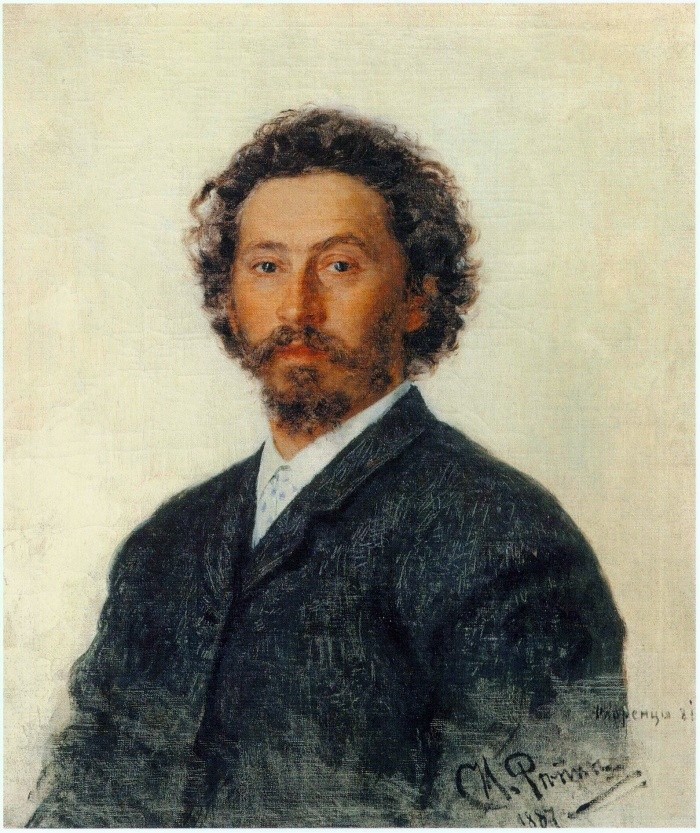
1887年出典 : Public domain ウィキペディアコモンズ 経由で
Source: via Public Domain Wikimedia Commons