「大ゴッホ展」に寄せて
In Connection with “The Great Van Gogh Exhibition”
訴えかけてくる絵とは?
先日、神戸での「大ゴッホ展」が好評のうちに閉幕した。モネやルノアールといった印象派の大御所やフェルメールと同様に日本人は本当にゴッホが大好きだ。ゴッホの展覧会は今まで各地で何度も開催されているが、毎回その集客力は凄まじい。何がそこまで我々日本人の心をひきつけてやまないのか? 生命力あふれる作品、生い立ち、生きざま、スキャンダラスな話題、弟テオと固く結ばれた兄弟愛、他にもいろいろあるだろう。いずれにせよ、一度ゴッホの世界に足を踏み入れてしまったら、次々と彼のアウトサイダーとしての様々な側面を覗いてみたくなるのだろう。ゴッホの世界はそんな奥深い魅力を湛えていると言えようか。
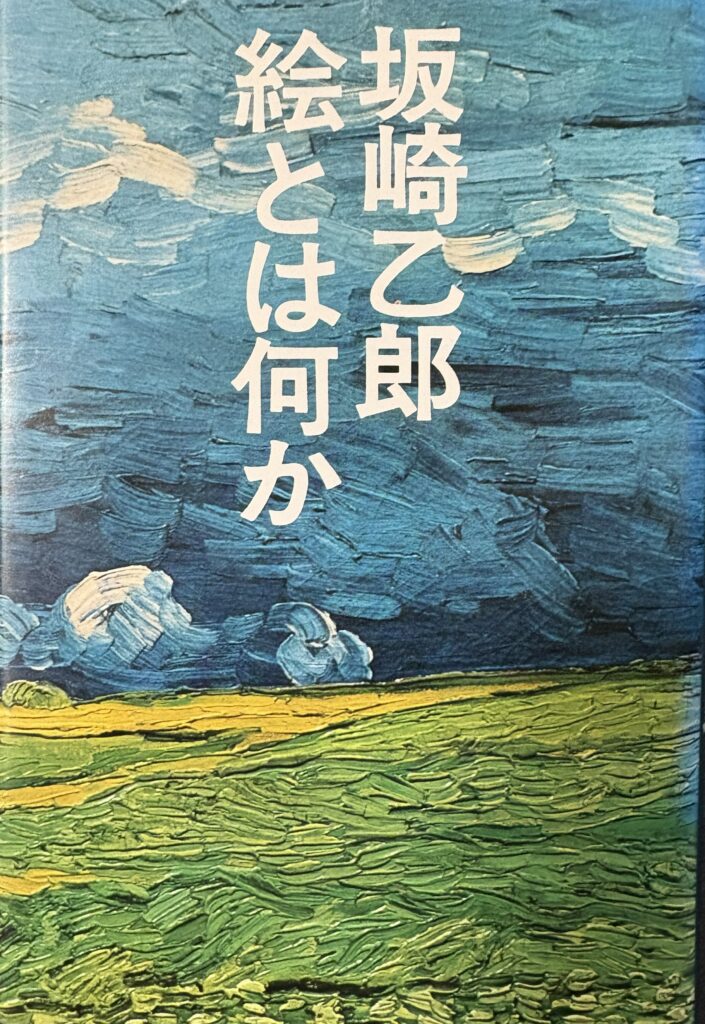
かく言う私もかつて学生時代にゴッホに傾倒した時期があった。「大ゴッホ展」のニュースに刺激され、本棚から学生時代に愛読した古い本を1冊取り出した。「絵とは何か」(坂崎乙郎 著 河出書房新社)である。もちろん、既に絶版になっており今ではアマゾンぐらいでしか入手不能である。当時、美術のことなど右も左もわからなかった画学生の私にゴッホの世界への入り口の扉を開いてくれた本である。一介の学生にとっては、難解な表現にしばしば出会ったが、大筋では理解できたことを記憶している。
今、改めて読み返してみると、驚くほど今の時代に通じることを著者は説いている。いきなり冒頭部分で小林秀雄の名著「ゴッホの手紙」を引き合いに出し、「絵の思想性」についての持論を展開し、最後は「二十世紀(※本書出版当時)の芸術は都会のある種、洗練された美ではないでしょうか?人口の装飾は反自然の脆弱な美ではないでしょうか?ゴッホもゴーギャンもセザンヌもパリでは真実の意味で開花しなかったはずです」「画家は自然の鼓動に聞き入らなければなりません」(※本書から抜粋)として人工的なるものを排し、自然に対して敬愛の念を抱くようすすめている。
自死した画家 鴨居玲のファンだった著者らしく絵画に人工的な華やかさや表面的な美しさを求めず、自然からのインスピレーションをもとに心の内奥を抉り出すことにこそ絵画の存在意義があると説いている。改めて「訴えかけてくる絵」とは何かを思いしらされることになった。同時に岡本太郎のあの言葉が蘇ってきた。「きれいなだけの 絵じゃだめだ、美しい絵じゃないとだめだ」
The recent “Great Van Gogh Exhibition” in Kobe has closed to great acclaim. Just as with the Impressionist masters such as Monet and Renoir, or with Vermeer, the Japanese truly love Van Gogh. Exhibitions of his work have been held many times in various places, yet each time the drawing power is astonishing. What is it that so irresistibly captures the hearts of us Japanese? His works, overflowing with vitality; his upbringing and life story; the scandals surrounding him; the deep bond of brotherly love with his younger brother Theo—there are surely many reasons. In any case, once one steps into Van Gogh’s world, one cannot help but want to peer into his many facets as an outsider, one after another. It may be said that Van Gogh’s world is imbued with such profound and inexhaustible appeal.
I myself once went through a period, in my student days, when I was deeply absorbed in Van Gogh. Stirred by the news of the “Great Van Gogh Exhibition,” I took a single old book from my bookshelf, one I had avidly read as a student. It was What Is Painting? by Otsuro Sakazaki (Kawade Shobo Shinsha). Of course, it is now out of print and can hardly be obtained anywhere except perhaps through Amazon. At a time when I was an art student who understood little about art and hardly knew right from left, this book opened the door to Van Gogh’s world for me. As a mere student, I often encountered passages that were difficult to grasp, yet I recall that I was able to understand the main thrust of the argument.
Now, rereading it once again, I am struck by how remarkably relevant the author’s ideas remain today. Right from the opening, he invokes Hideo Kobayashi’s renowned Van Gogh’s Letters and develops his own theory of the “ideological nature of painting.” Toward the end, he writes: “Is not twentieth-century art (at the time of this book’s publication) a kind of refined urban beauty? Is not the ornamentation of populations a fragile, anti-natural beauty? Neither Van Gogh, nor Gauguin, nor Cézanne truly came into full bloom in Paris.” He concludes by asserting, “A painter must listen intently to the pulse of nature” (quoted from the book), urging the rejection of the artificial and advocating a reverent attitude toward nature.
True to the author’s fondness for Rei Kamoi, the painter who took his own life, he does not seek artificial brilliance or superficial beauty in painting. Instead, he argues that the true raison d’être of painting lies in gouging out the innermost depths of the human heart, drawing inspiration from nature itself. Once again, I was made to reflect deeply on what it means for a painting to truly “speak” to us. At the same time, those famous words of Taro Okamoto came back to me:
“Just being pretty isn’t enough. It has to be beautiful.”