魂が宿る絵画とは?What are Paintings Imbued with A Soul
作品に対する身体的反応について
小林秀雄は名著「ゴッホの手紙」の冒頭部分で1947年に上野の美術館で開かれた泰西名画展覧会で展示されたゴッホの遺作「カラスのいる麦畑」を見て、その異様な画面に圧倒され、その場にしゃがみこんでしまったというエピソードを紹介している。魂が宿る作品を前にして身体が反応するというのは、「視線が釘付けになる」 「深い静寂に包まれるような感覚に陥る」などと同様、こういうことを言うのだろう。
Kobayashi Hideo recounts an episode at the beginning of his renowned book 「Gohho no Tegami (The Letters from Gogh)」: in 1947, at the National Musium in Ueno,Tokyo he saw Vincent van Gogh’s final work, 「Wheatfield with Crows」 which was exhibited at the Exhibition of Western Masterpieces. He was so overwhelmed by the painting’s uncanny intensity that he found himself crouching down on the spot.
When one stands before a work infused with the artist’s very soul and the body reacts involuntarily, it is much like the feeling expressed in phrases such as “one’s gaze becomes riveted” or “one is enveloped in a profound silence.” This is precisely what such expressions are meant to convey.
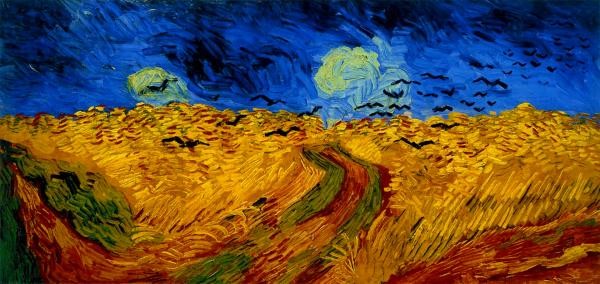
「カラスのいる麦畑」ゴッホ 1890年 ファン・ゴッホ美術館
出典 G素材( https://g-sozai.com )
「Wheatfield with Crows」 Vincent van Gogh 1890
私の絵画との関りについて述べれば、小林のように感動のあまり作品を前にして、しゃがみこんだという経験はないが、別の形での「身体的反応」の経験は少なくとも2度ある。最も印象に残っているのは中学生の頃、両親に連れられて行った京都の美術館で観たミレーの「春」である。何の予備知識も持ち合わせず会場に入ってみると、数多く並んだ作品の中から、その作品だけが何故かスーっと目に飛び込んできたのである。感動などという言葉では言い表せない、それまで経験したことのない独特の不思議な感覚であった。今でも私にとってミレーの作品といえば、「晩鐘」でもなく「落穂拾い」でもなく「春」なのである。
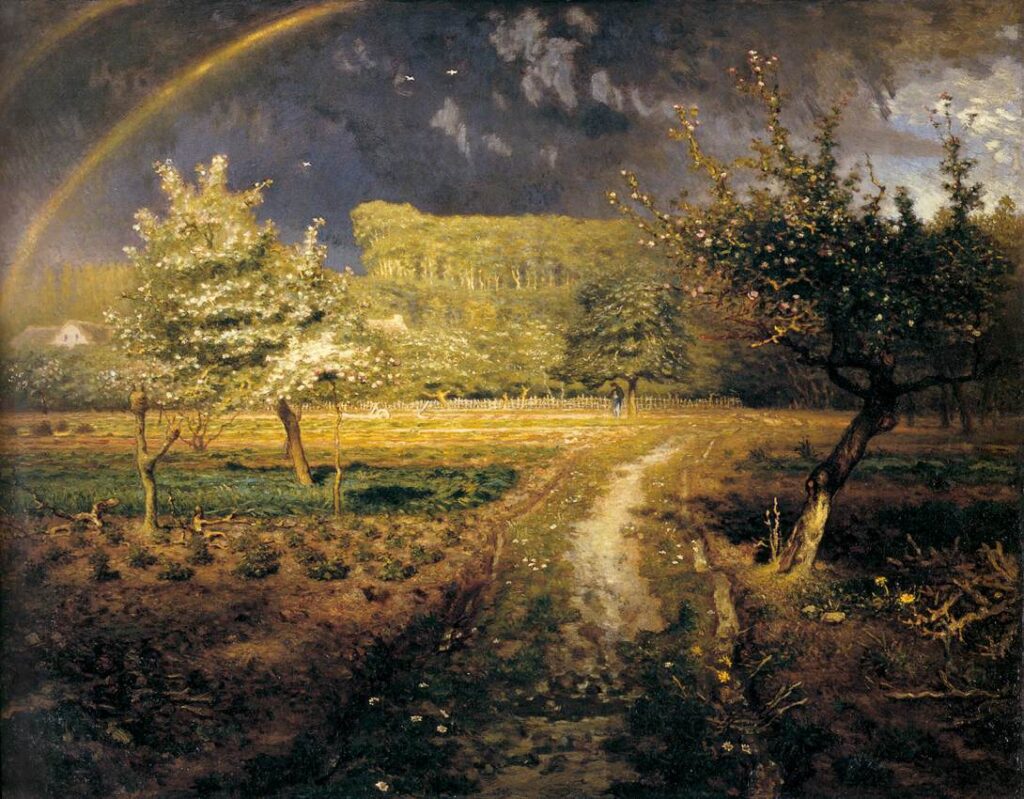
「春」ジャン=フランソワ・ミレー 1868年~1873年 オルセー美術館
出典 名画な画家の作品<パブリックドメイン> https://worldmasterpieces.blog.fc2.com
「Spring」 Jean-Francois Millet 1868 ~1873
次にご紹介するのは、小学校5,6年生の頃の絵の話。教室の黒板の上の壁に黒田清輝の「読書」(もちろん、当時そんなことは知る由もなかったのだが)が飾ってあった。外国人女性が一心不乱に読書をしている様子を描いた作品である。恐らく学級担任の趣味で飾られたものだったのであろうが、その作品について担任が語ったという記憶はない。当時、作品に感動した記憶などまるで無いのだが、毎日、否が応でも目に入ってくるわけで、完全に学校生活の一部として定着していた。今でも瞼を閉じると、かつての教室の「読書」は鮮明に蘇ってくる。しかし、これは「身体的反応」というより、単なる記憶というべきか?
If I speak about my own relationship with painting, I have never had the experience of being so overwhelmed with emotion that I crouched down in front of a work, as Kobayashi did. However, I have had at least two experiences of a different kind of “physical reaction.” The one that left the deepest impression on me was Jean-FrançoisMillet’s 「Spring」, which I saw at an art museum in Kyoto when I was a junior high school student. I entered the gallery with no prior knowledge, and yet, among the many works on display, that painting alone somehow seemed to glide straight into my vision. It was a strange and unique sensation unlike anything I had ever experienced, something that could not be adequately described by the word “moving.” Even now, when I think of Millet’s works, it is neither 「The Angelus」 nor 「The Gleaners 」hat comes to mind, but 「Spring」.
Next, I would like to share a story about a painting from when I was in the fifth and sixth grades of elementary school. On the wall above the classroom blackboard hung 「Woman Reading」 by Kuroda Seiki—though of course I had no way of knowing that at the time. The painting depicts a foreign woman absorbed in her reading. It was probably displayed according to the homeroom teacher’s personal taste, but I have no memory of the teacher ever speaking about the work. At the time, I had no particular recollection of being moved by it. Nevertheless, I saw it every day whether I liked it or not, and it became completely ingrained as part of my school life. Even now, when I close my eyes, the image of 「Woman Reading 」in that old classroom vividly comes back to me. However, perhaps this is not so much a “physical reaction” as it is simply a matter of memory.
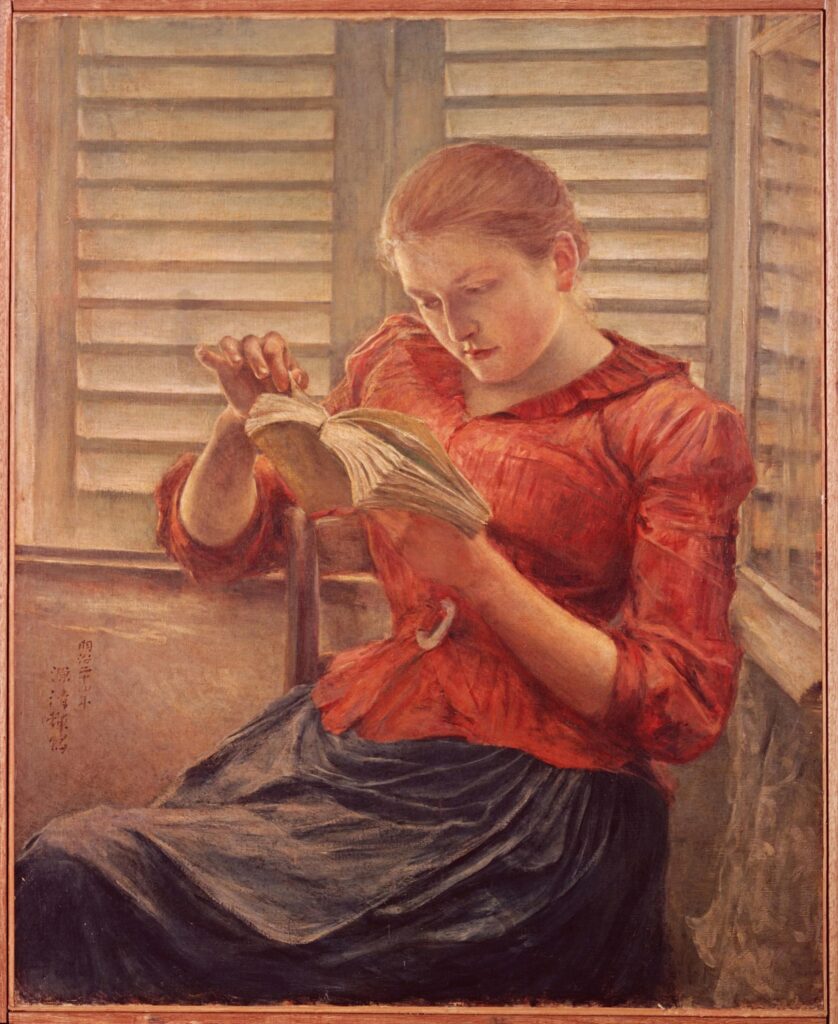
「読書」黒田清輝 1891年 東京国立博物館
出典 国立文化財機構所蔵品総合検索システム ColBase (https://colbase.nich.go.jp/)
「Woman Reading」 Kuroda Seiki 1891