北斎とドビュッシー Hokusai and Debussy
ジャポニスムの衝撃
先日、FM放送を聴きながら愛車を走らせていると、たまたまドビュッシーの「月の光」(※私のお気に入りの1曲)が流れてきた。何度聴いても耳に心地よいメロディーだ。ドビュッシーといえば、日本美術に高い関心を示した音楽家として知られる。自宅に日本の仏像や鍋島焼のインク壺があり、また書斎には葛飾北斎の「富嶽三十六景・神奈川沖浪裏」が飾ってあったとか。
そもそもドビュッシーは、どうやって北斎を知ったのか? この疑問の「鍵」はジャポニスムである。徳川幕府崩壊前夜の1867年、パリ万博が開催された。当時、既に開国していた日本からも徳川幕府と薩摩藩が焼き物などの工芸品や浮世絵を出品した。このことが契機となり、「ジャポニスム」として、一躍、日本の工芸品や浮世絵が注目されるようになった。中でも浮世絵が与えた影響は、セザンヌやルノアール、ゴーギャン、ゴッホらの印象派を中心とする美術界のみならず、音楽の分野にも及んだ。「ベルグマスク組曲」や「牧神の午後への前奏曲」などで有名なドビュッシーもその影響を受けた一人だった。彼の北斎への情熱は、やがて交響詩「海」(ちなみに「海」の楽譜表紙絵は「富嶽三十六景・神奈川沖浪裏」から一部拝借している)として結実し、彼の代表作の一つとなった。
私はクラッシック音楽に関しては、全くの門外漢なので、今回のブログを書くにあたって初めて「海」全曲を通して聴いてみた。
第1楽章「海上の夜明けから真昼まで」・・・どこか中国的でエキゾチックな音色も交え、楽章全体を通して大海原が雄大に広がり、ゆったりとしたうねりを見せる様子を想起させる
第2楽章「波の戯れ」・・・小さな波が徐々に逆巻き、ディズニーアニメなど映画のBGMを連想させる雰囲気を醸成させながら、海面が波立ってくる様子が伝わってくる
第3楽章「風と海の対話」・・・序盤は再び第1楽章の雰囲気に戻り、少しずつうねりを大きくさせる海は、しぶきを飛ばし始め、終盤に向かってさらにその大きさを増していく
眼を閉じて「海」を聴いていると、自分自身が「富嶽三十六景・神奈川沖浪裏」の画中に入り込み、大波に翻弄される小舟に乗った人々のような心境になってしまった。
出典 葛飾北斎「富嶽三十六景・神奈川沖浪裏」 東京国立博物館 研究情報アーカイブス https://webarchives.tnm.jp
ドビュッシー 交響詩「海」楽譜表紙絵 From The Great Wave off Kanagawa by Hokusai Katsushika, Public domain, ウィキィペディア・コモンズ経由で
https://upload.wikimedia.org/wikipedia/commons/a/af/Debussy_-_La_Mer_-_The_great_wave_of_Kanaga_from_Hokusai.jpg
https://commons.wikimedia.org/wiki/File:Debussy_-_La_Mer_-_The_great_wave_of_Kanaga_from_Hokusai.jpg
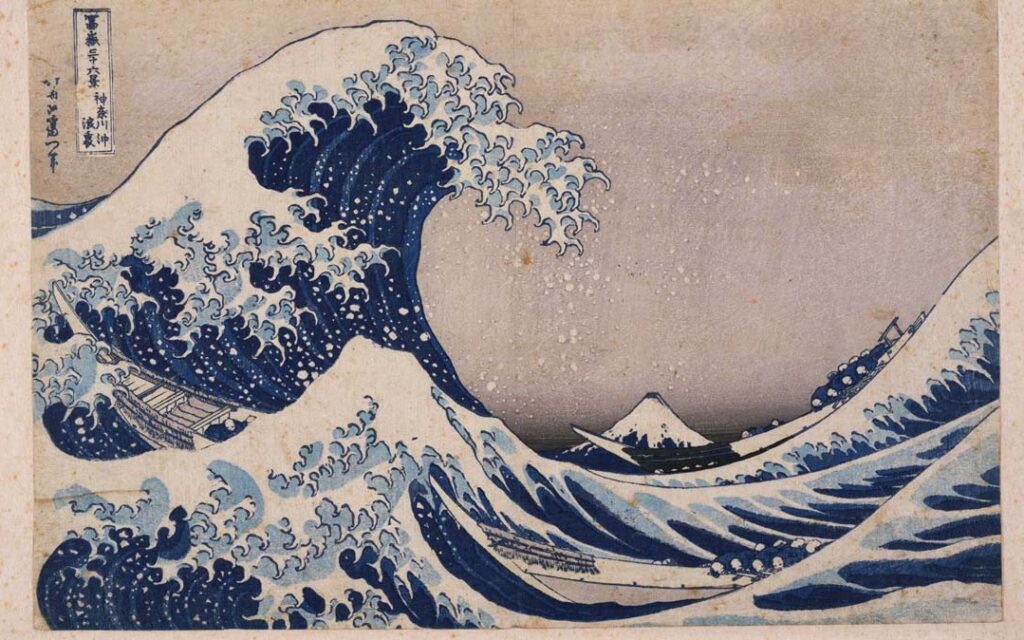
The Great Wave of Kanagawa from Katsushika Hokusai
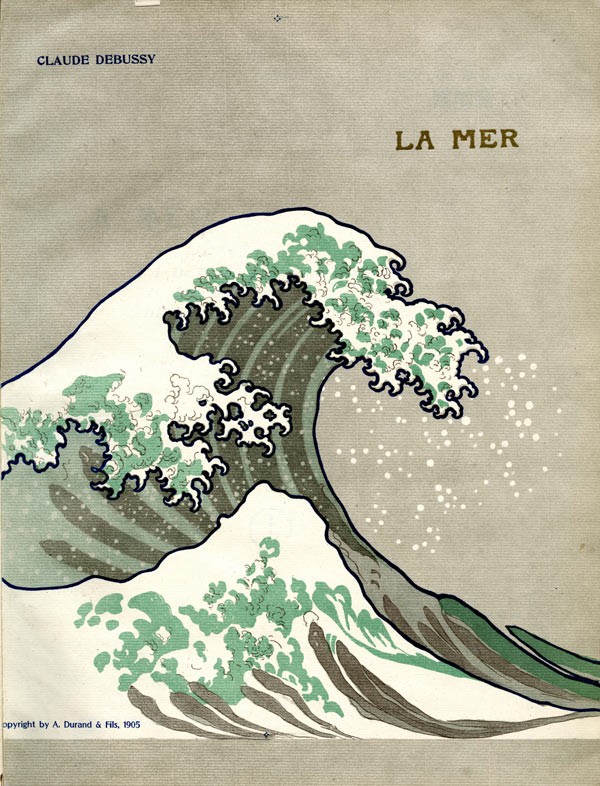
Debussy 「La Mer」
The Impact of Japonisme
The other day, as I was driving my car while listening to an FM radio broadcast, Claude Debussy’s Clair de Lune (one of my favorite pieces) happened to come on. No matter how many times I hear it, its melody is always soothing to the ear. Debussy is well known as a composer who had a deep interest in Japanese art. It is said that he kept Japanese Buddhist statues and a Nabeshima-ware ink pot at home, and even displayed Katsushika Hokusai’s The Great Wave off Kanagawa from the series Thirty-Six Views of Mount Fuji in his study.
But how did Debussy first come to know Hokusai? The “key” to this question lies in Japonisme. In 1867, on the eve of the collapse of the Tokugawa shogunate, the Paris Exposition was held. Japan, which had already opened its doors to the world, participated through the Tokugawa shogunate and the Satsuma domain, exhibiting crafts such as ceramics and ukiyo-e prints. This event sparked widespread interest in Japanese art, which came to be known as Japonisme. Among these, ukiyo-e had a particularly profound influence—not only on the art world, especially the Impressionists such as Paul Cézanne, Pierre-Auguste Renoir, Paul Gauguin, and Vincent van Gogh, but also on the field of music. Debussy, famous for works such as Suite bergamasque and Prélude à l’après-midi d’un faune, was one of those influenced. His passion for Hokusai eventually culminated in the symphonic work La Mer—incidentally, the cover of its score borrows an image from The Great Wave off Kanagawa—which became one of his masterpieces.
As for myself, I am by no means an expert in classical music, so in writing this blog, I listened to the entirety of La Mer for the first time.
I. “From Dawn to Noon on the Sea”
The movement blends somewhat Chinese or exotic tonal colors, evoking the vast ocean stretching out in grandeur, with a gentle, rolling swell throughout.
II. “Play of the Waves”
Small waves gradually gather and swirl, creating an atmosphere reminiscent of film background music, such as in Disney animations, while vividly conveying the restless motion of the sea’s surface.
III. “Dialogue of the Wind and the Sea”
The opening returns to the mood of the first movement, as the sea slowly builds in intensity. Waves begin to crash and spray, growing ever more powerful toward the conclusion.
As I listened to La Mer with my eyes closed, I felt as though I had entered the world of The Great Wave off Kanagawa, becoming like one of the people aboard a small boat, tossed about by the towering waves.